


Impression 5 Science Center Homeschool Science Program
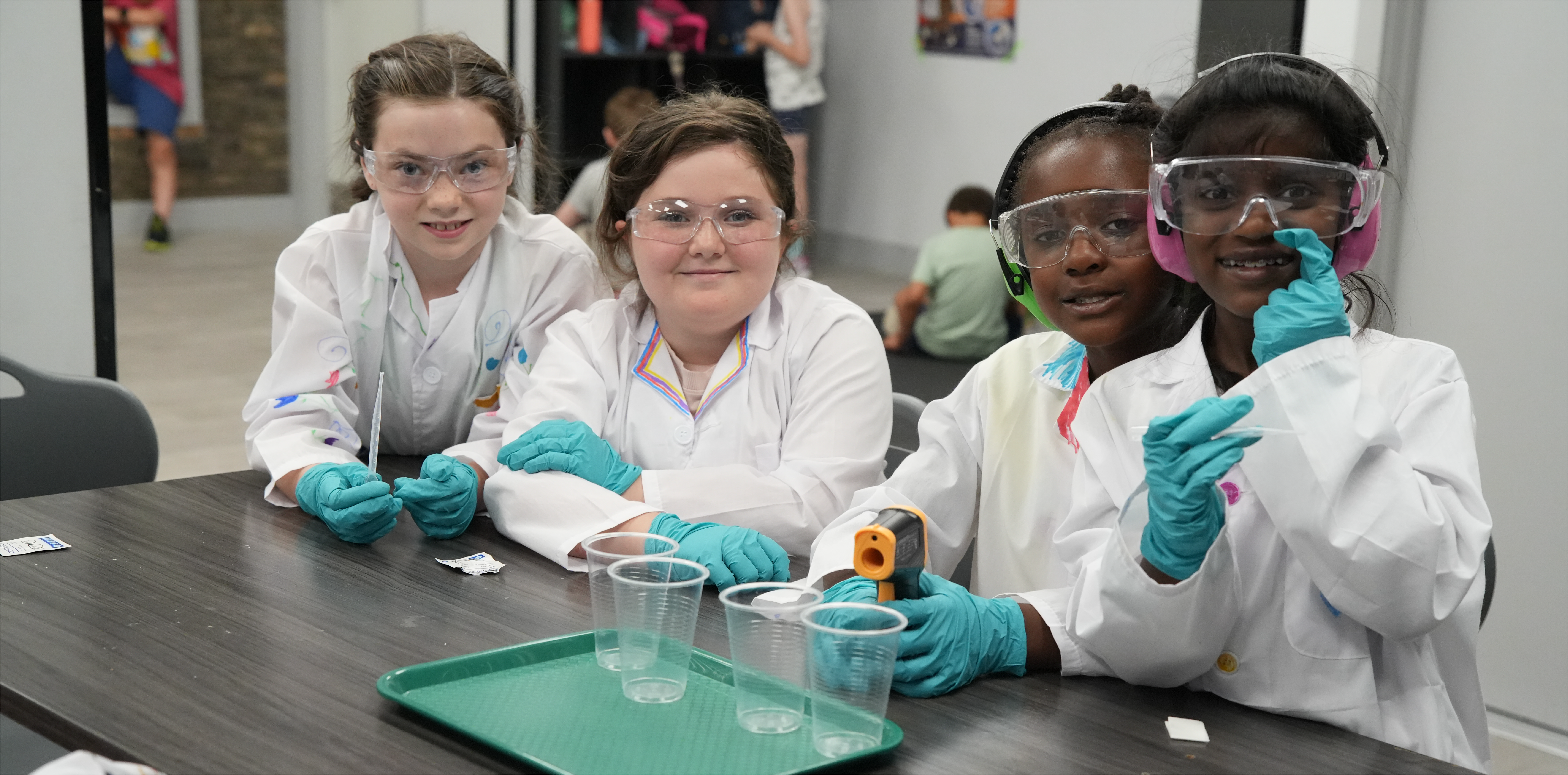
Join us on select Fridays from 2:30 to 3:15 p.m. to explore interactive activities aligned with Next Generation Science Standards (NGSS) for grades 1st through 4th. This is an exciting opportunity for kids to engage in hands-on science activities and connect with other members of the homeschool community.
Ages: 6 to 10
Time: 2:30 to 3:15 p.m.
Cost:
Members: $13 / session
Not-Yet Members: $20 / session
Register: Online, by calling the Impression 5 Reservations Department at (517) 485-8116 ext. 132, or at the Guest Services Desk.

Homeschool Science Program Dates & Themes
Earth, Moon, & Sun
October 2
Students will learn about how the Earth, Moon, and Sun interact with each other in space, as well as about their distances from each other and their orbits. They will then create their own model of these three celestial bodies.
Egg Drop Challenge
October 9
Students will try to protect an egg from cracking when dropped from a ladder! They will use the engineering design process as well as lots of materials to try to protect their egg.
Gravity Racers
October 16
Students will test multiple factors like aerodynamics, friction, mass, and more as they learn about the effects of gravity on an object’s ability to move.
Fossil Inferences
October 23
Students will learn about how fossils are made and make their own fossil replicas. They will also try to identify different specimens as either fossils or not fossils.
Light Workshop
October 30
Students will learn about light waves and the visible light spectrum. They will see demonstrations to understand white light, diffraction, refraction, reflection, and absorption.
Hear Like A Deer
November 6
Students will learn about how ears work, and will then be able to create their own deer ears on a headband - on which they will try to create some type of adaptation that they think will help the deer survive.
Food Chains & Webs
November 13
Students will learn about how energy is passed from plants to animals and back by learning more about food chains and webs.
Experimental Design
November 20
Students will experiment with acids and bases and different ratios between them to design the best reaction. They will learn about constants, variables, and results.
Owl Pellets
January 29
Students will learn about the digestive system of an owl and how it differs from other birds of prey. They will then be able to dissect an owl pellet and try to identify their findings!
Microwave Science
February 5
Students will learn about how the microwave was created and how it works. Then, they’ll make predictions about how different items will act in the microwave and test their hypotheses. Don’t try this at home!
Foam Rollercoasters
February 19
Students will learn about gravitational potential energy and kinetic energy and then use that information to create roller coasters for a marble. They will be challenged to add a curve, loop-de-loop, and more!
Life Cycles
February 26
Students will learn about how the life cycles of different species are alike and different from each other. Then, they will learn about the life cycle of a monarch butterfly as they make a life cycle card.
Wind Engineering Challenge
March 5
Students will learn about biomimicry and the adaptations of different organisms that can fly like birds, bats, and insects. Then, they will be challenged to create a wing or pair of wings that incorporates biomimicry and can withstand the force of a high speed electric fan.
Earth's Systems
March 12
Students will learn about each of earth’s systems (lithosphere, biosphere, hydrosphere, and atmosphere) and about how they interact with each other. Then, they will create a foldable key of the earth systems and what they do.
Exothermic vs. Endothermic Reactions
March 19
Students will learn about the differences between exothermic and endothermic reactions. They will then make predictions and observe 4 different chemical reactions and measure temperatures to determine which type of reaction each one is.
Moon Phases
April 9
Students will learn about the different phases of the moon and about how the Earth and moon move in space. They will then use sandwich cookies to create a tasty model of the moon phase cycle.
Note: this activity uses Oreos or similar cookies – please let us know if your child has an allergy so we can make reasonable accommodations.
Sign up for Homeschool Science


